· Jake Sorensen
Fishing Pliers vs. Regular Needle-Nose: The 4 Parts That Are Built Differently
The comparison shows up the moment you price a pair of fishing pliers next to the long-nose plier already in your garage drawer. We sell fishing pliers, and everything below is checkable: what each part of the tool is ground, shaped and moulded to do.
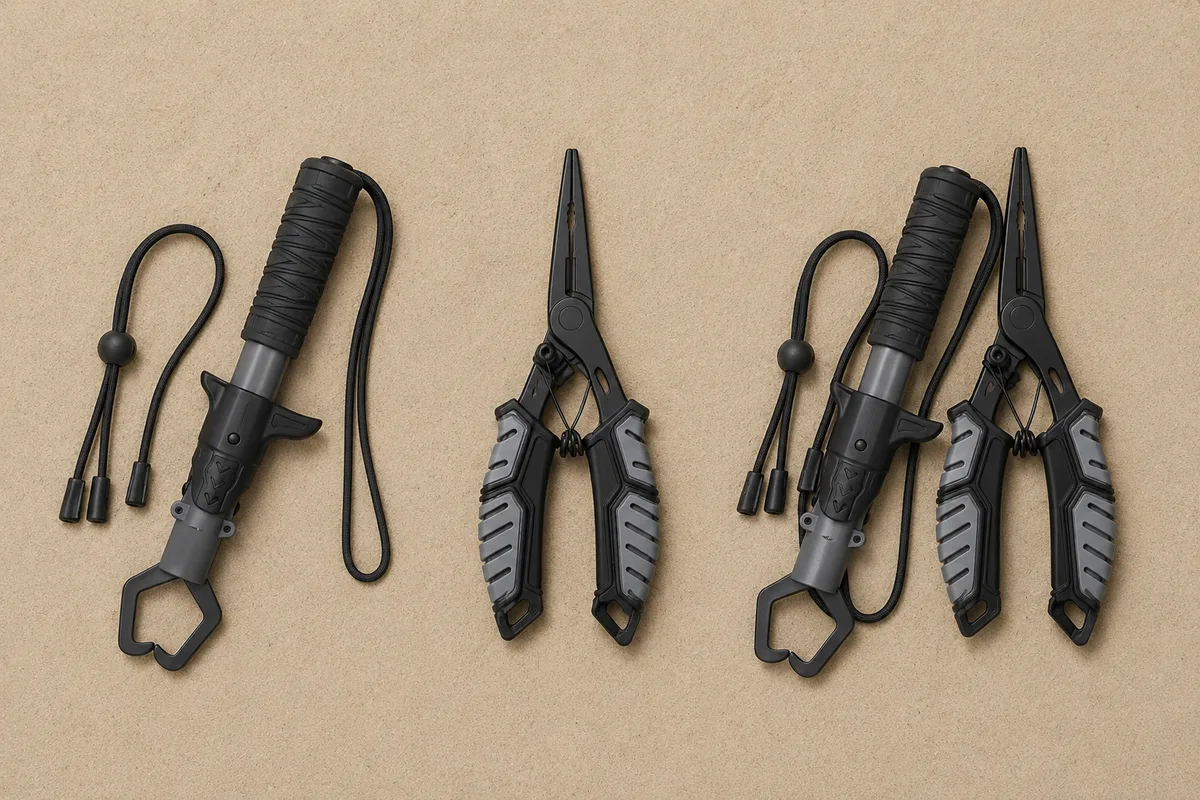
What does a fishing plier actually add over a needle-nose?
Long-nose pliers were designed for bench and electrical work: bending wire, gripping fasteners, pulling a nail in a dry room. The side cutter near the pivot is ground for solid copper and steel.
Fishing loads the same shape differently: repeated cuts through polymer line, coils under spring tension, and a grip that survives water, slime and sunscreen. Those four changes go to work every time your fishing meets water, salt or braid. On tip geometry, our split ring pliers page covers it.
How much of the tool corrosion can reach
Corrosion is the single biggest difference between a bench plier and a fishing plier, and it scales with salt. Plated carbon steel degrades slowly in fresh water and fast in salt, because dried crystals keep working inside the pivot long after the trip ends.
HookGrip removes most of that surface from the equation: the ABS body cannot corrode at all, and the stainless jaw is the only metal the water reaches. A rinse and a dry before storage is all the maintenance the joint asks for.
Where a hardware-store plier gives out on the water
The failure is almost never dramatic. It is a pivot that turns stiff, then gritty, then stops. Most bench pliers are plated carbon steel, fine in a drawer, flash-rusting once salt water dries inside the joint. The plating chips at the jaw first, and bare steel then meets everything you dip it in.
The second failure is the handle. Bare steel or a hard PVC dip works with dry hands. Add water and slime and the tool rotates in your grip exactly when you apply force. That is when pliers go over the side, and why HookGrip uses TPR, a choice covered in the stainless steel materials guide.
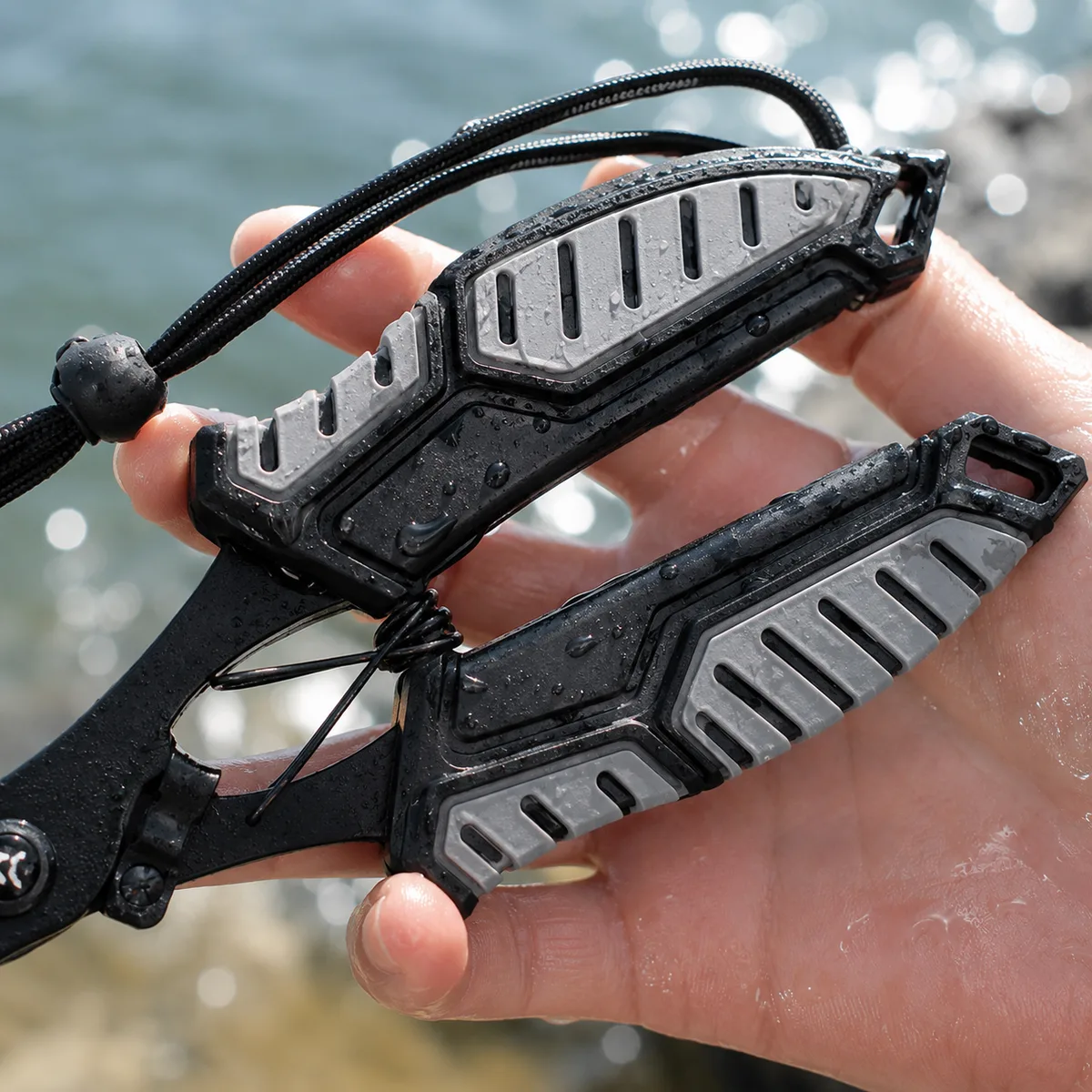
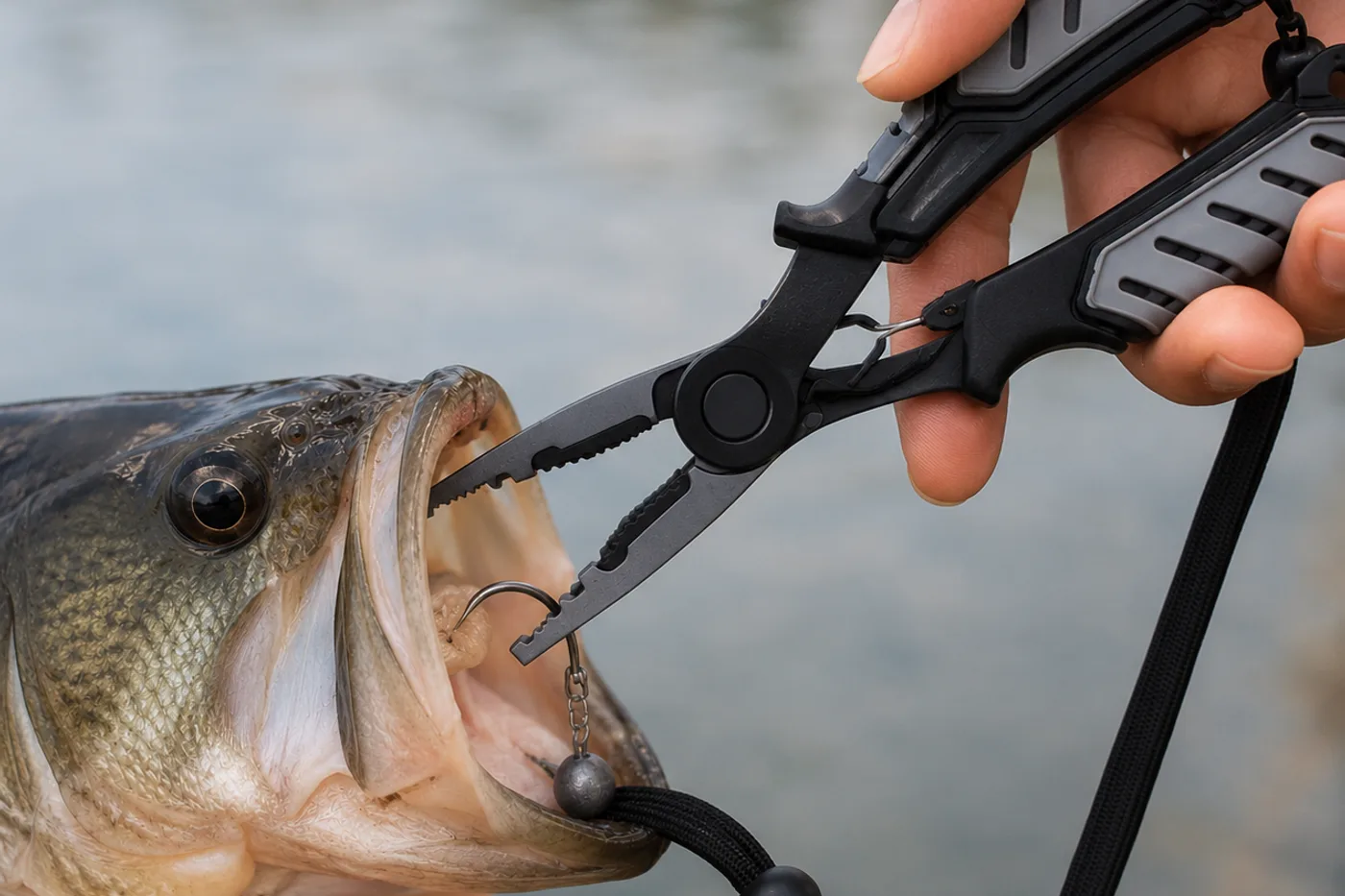
The third is control at the business end. A long-nose plier reaches into a fish's mouth, but its serrations are cut to hold a bolt square, not to follow a hook curve back out.
Can regular pliers cut braided line?
In practice that means a tag end that will not pass back through a hook eye, so you trim again, and again. It is the most common reason anglers reach for a fishing-specific tool.
HookGrip's stainless jaw shears mono, fluoro and braid in one closing, and the same tool then opens the ring and backs the hook out one-handed while a fish waits. That is three jobs on one belt clip, at 90 grams.
What $24.95 changes, part by part
| Part of the tool | Typical bench needle-nose | HookGrip Pliers |
|---|---|---|
| Cutting edge | Side cutter ground for solid wire | Stainless jaw, shears mono, fluoro and braid |
| Tip profile | Tapered for gripping small parts | Shaped to enter a split-ring seam |
| Handles | Bare steel or hard plastic dip | TPR rubber, textured for wet hands |
| Corrosion behaviour | Plated carbon steel, rusts once chipped | ABS body cannot corrode; stainless jaw resists it |
| Carry | Usually none included | Belt pouch included |
Bench-plier properties are general category behaviour, not measurements of a named competitor tool we have tested ourselves.
HookGrip Pliers price, belt pouch included
— HookGrip pricing page, 2026
total tool weight, ABS body plus stainless jaw plus TPR handles
— HookGrip product specifications, 2026
saltwater immersion in our own bench test: no pitting on all 3 units, all still cutting 20lb mono cleanly
— HookGrip in-house testing, 2026
What buyers report after switching
The most useful reviews come from anglers who used a bench tool on the water first. One verified buyer put it plainly: "I am satisfied because the pliers are larger than usual. They are really strong."
average rating across 288 verified buyer reviews, including the mixed ones above
— HookGrip verified buyer data, 2026
What the tool does, by how you fish
| How you fish | What HookGrip does for it | Which part does the work |
|---|---|---|
| A few freshwater trips a year, mono, dry storage | Cuts mono flush, then stores in the belt pouch without marking your bag | Stainless jaw plus the included case |
| Freshwater, braid, frequent lure changes | Shears braid in one closing and opens the ring with the same tip | Jaw ground for polymer line, tip shaped to the coil seam |
| Any regular saltwater fishing | Leaves only one metal surface exposed to salt, and it is stainless | ABS body, which cannot corrode |
| Kayak, wading or boat, tool carried on you | Holds in a wet, slimed hand and clips to a belt at 90 grams | Textured TPR handles and the belt pouch |
The HookGrip Pliers at $24.95 cover the cut, the ring and the hook in one hand. If you also land fish by hand, the fish gripper handles what pliers are not, and our fishing pliers set breakdown shows the combo pricing.
The tool's working range
Stainless resists rust, it does not eliminate it, and a tool left closed and wet in a sealed pocket finds that out — a rinse and a dry keep the jaw sharp. Sizing has a range too: verified feedback puts comfortable use of the Grips at roughly 3 to 4 kg, and the plier tip is built for freshwater and light inshore rings rather than offshore hardware.
What we do and do not claim is on how we test. For the category comparison, read the best fishing pliers guide; for materials, the aluminum versus stainless steel breakdown.
Frequently asked questions
Are fishing pliers just needle-nose pliers with a fishing logo?
Four parts are built differently: the cutting edge is ground for polymer line rather than solid wire, the tip is shaped to enter a split-ring seam, the handles are TPR moulded for wet hands, and the jaw is stainless while the body is ABS, which cannot corrode at all.
Can I use needle-nose pliers to open a split ring?
You can try, but a blunt bench tip rarely finds the seam between the coils, so it skates off and marks the ring. Our split ring pliers page covers the tip geometry.
Will regular pliers rust if I only fish freshwater?
Much more slowly, yes. Plated carbon steel handles occasional freshwater exposure fine if you dry the pivot before storage. Salt turns a slow problem into a fast one, because dried crystals keep working inside the joint.
How many tools does one fishing plier replace on a trip?
Three separate moments: cutting mono, fluoro or braid, opening a split ring, and backing a hook out of a fish. HookGrip covers all three one-handed, in 90 grams, which is why it rides on a belt instead of in a box.

Jake Sorensen · Outdoor Gear Tester, 7 yrs reviewing fishing tools
Jake has spent seven years testing and reviewing outdoor and fishing gear, from budget tackle to offshore-grade tools, focusing on real-world durability over spec sheets.